


No job is worth putting your life at risk.
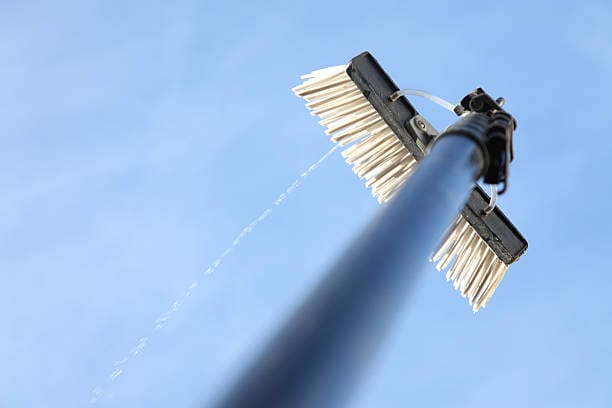
This article is about the Look Up Look Out Campaign and the important safety precautions that should be taken when using long-reach water-fed poles and any other long-reach systems near overhead power lines.
LOOK UP → check for overhead power lines before starting work
LOOK OUT → stay aware of your surroundings while moving and working
The Look Up Look Out Campaign is a national safety campaign raising awareness of the serious risks faced by anyone using long-reach water-fed poles, gutter-vac poles, roof-cleaning equipment, solar-panel cleaning equipment or any other long-reach system near overhead electricity lines.
When close to power lines, electricity can arc (jump) and reach a water-fed pole, even if you don’t actually touch the lines, so working near the power lines is very dangerous. Electrocution from power lines can be fatal.
The core Look Out, Look Up safety message has existed in electricity industry guidance for many years. However, the campaign has been recently promoted by father and son, John and Jason Knight, who wanted to raise awareness after a very unfortunate incident where Jason was electrocuted by power lines 2 metres away from where he was working on the 6th of April 2024.
A 33,000-volt flashover jumped about 2 metres from an overhead line to Jason’s telescopic water-fed pole, without physical contact. Jason survived, but sustained life-changing injuries, including the loss of his left forearm, several toes, severe burns and extensive damage to his legs. He has undergone more than 20 operations.
After the incident, John and Jason Knight made it their mission to highlight the extreme risks of using long-reach water-fed poles near high-voltage power lines and to encourage safer decisions, better awareness and safer equipment design across the industry. Click here to head to their new website.
John is also campaigning for improved standards and clearer safety expectations around water-fed poles and other long-reach systems.
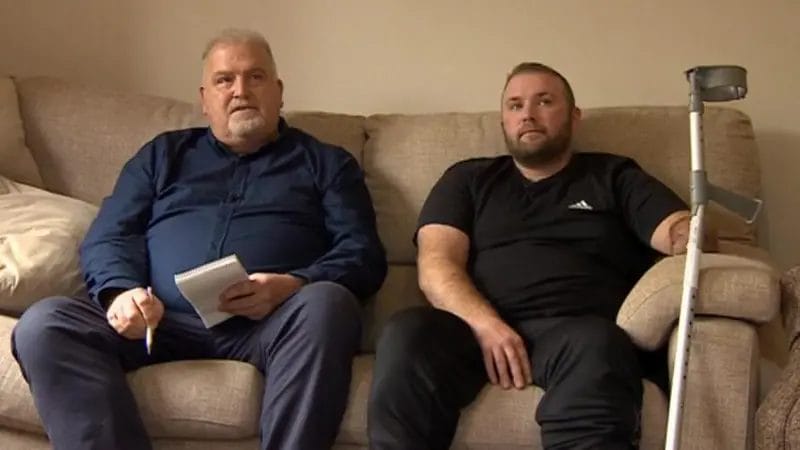
Spotless Water met with John at the Cleaning Expo 2026 and is supporting the campaign by helping raise awareness across the window cleaning industry.
The official Look Up Look Out website is now live. It is free to use, with no subscription and no paywall. The website contains a variety of help and support, including: safety tips, near-miss reporting, support for requesting advice, location-based safety information, consumer guidance, industry news, and much more!
Check your work area. Look up for overhead hazards first.
If you see overhead lines, treat them as live, unless the local electricity network operator has confirmed otherwise in writing.
If you are unsure whether a line is power or telephone, assume it is a power line and seek advice.
For urgent electricity safety concerns in Great Britain, call 105 to connect you with the local network operator.
For planned work, contact the DNO for advice and ask whether a site assessment, temporary shrouding or other control measures are possible.
HSE GS6 guidance states that if you are within 10m of an overhead electricity line then you must treat this as high risk and get advice.
Minimum clearances suggested by the ENA states*:
– 230V / 400V = 1m
– 11kV / 33kV = 3m
– 132kV = 6m
These are minimum distances, not target working distances. If in doubt, stop and ask the DNO for advice.
*UK guidance only, from Look Out Look Up! A Guide to the Safe Use of Mechanical Plant in the Vicinity of Electricity Overhead Lines Energy Networks Association (ENA)
If you feel you are at an unsafe distance, then do not proceed. Reposition, reschedule, or walk away. No job is worth your life.
PPE and insulated tools are last lines of defence. They do not make unsafe distances safe and they are not permission to work near overhead lines.
Follow this process for every job. Make it your habit to do these steps for each clean and remember no tools, no deadline, and no customer pressure overrides these steps – your safety is more important.
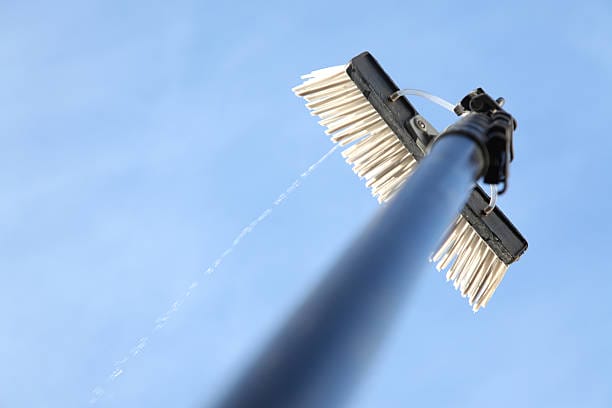
Overhead power lines are dangerous. Electricity can jump. Always look up before you start, look out while you work, contact the DNO if there is any doubt, and stop immediately if you cannot work safely. No job is worth your life.
See the sources we used for this article below for more information. Stay safe!
 July 30th 2026
A spotless finish in the window cleaning industry
 July 24th 2026
Your guide to ordering a new Spotless Water key fob
 July 3rd 2026
Your guide on how to 'Refer a Friend'
June 4th 2026
Big news: We’re accelerating the growth of Spotless Water!
 March 18th 2026
We're excited to announce our new partnership with Park Garage Group!
 February 25th 2026
We're proud to announce we've been ranked 24th in the Elite Business 100
 November 11th 2025
Partnership with Morrisons announcement
 October 20th 2025
Discover how Spotless Water effectively addresses challenges posed by windy conditions during window cleaning processes
 October 8th 2025
Discover how Spotless Water effectively addresses challenges posed by windy conditions during detailing processes
 September 15th 2025
A new feature on the Portal to improve your pure water filling experience